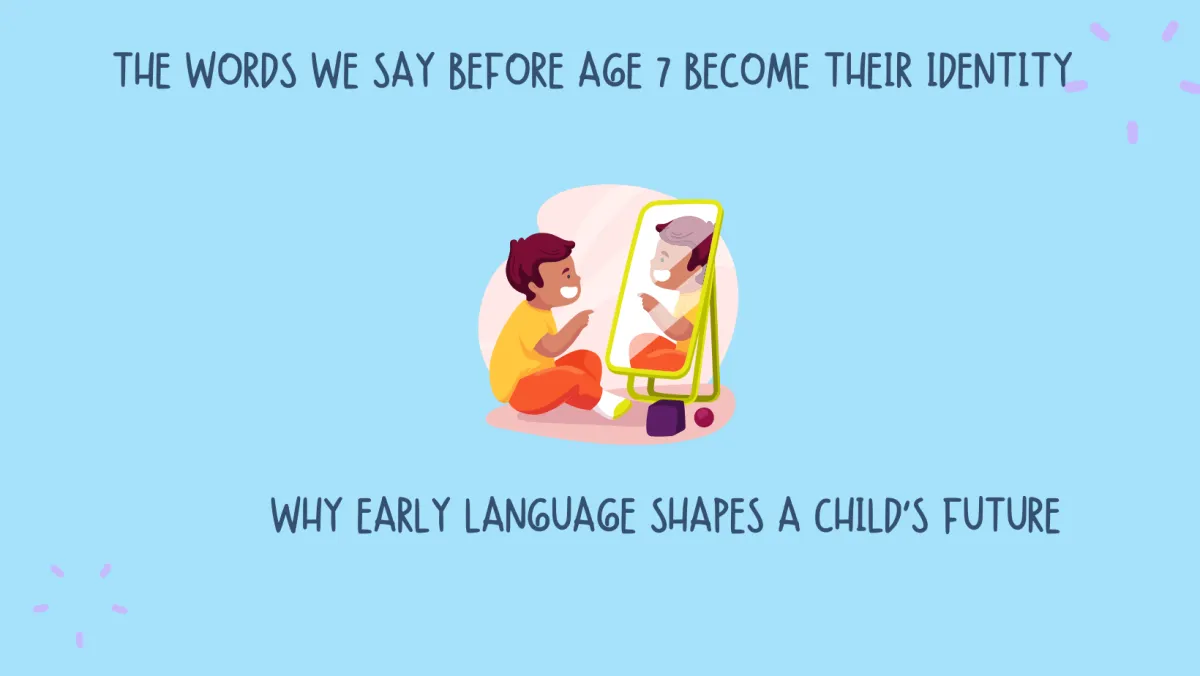
Why the Words We Speak Before Age 7 Shape a Child for Life
A 7-Year Window That Shapes a Lifetime
By age seven, a child’s belief system is mostly formed.
That fact may seem shocking, but it’s backed by decades of developmental psychology. In those early years, children aren’t just learning to walk or talk they’re learning who they are.
They internalize every word we say. Every label. Every offhand comment.
If we say:
“You’re so shy.”
“You always make a mess.”
“You’re such a troublemaker.”
They don’t question it.
They believe it.
As a Latina mom and first-generation Guatemalan immigrant, I’ve lived this truth both as a child and as a parent. What we say to our children becomes the lens through which they see the world and themselves.
That’s why I created Big Dreams, Tiny Steps and its Spanish edition, Grandes Sueños, Pasitos Pequeños.
Because when we give children the right words early, we give them the gift of confidence, resilience, and self-belief.
The Science Behind Early Identity Formation
Research shows that children are in a highly programmable brain state between ages 0–7. They’re absorbing everything around them not just consciously, but subconsciously. According to Dr. Bruce Lipton, a cell biologist and expert in epigenetics, children operate primarily in theta brainwave states, which are the same as those used in hypnosis.
Translation? Children believe what we say as truth because their brains are wired to absorb it as such.
This is why early exposure to affirming, empowering language is not just helpful it’s critical.
A simple phrase like:
“You can do hard things.”
“Your voice matters.”
“You are loved.”
…isn’t just sweet. It’s shaping their identity.
How Affirmations Work for Ages 0–4
You might think toddlers are too young to understand affirmations. But here’s what I’ve learned through parenting and personal therapy:
Even if a child can’t repeat the words, they can feel the energy behind them.
When a caregiver consistently speaks strength, calm, and belief into a child’s daily life, those words become familiar. They become normal. They become truth.
In my home, I’ve shifted from saying things like:
“You're being so bossy today,”
to“Wow, you’re being a strong leader today.”
Or from:
“You’re being nosy,”
to“You’re really curious and observant.”
This is how we start reframing identity even before our kids fully understand the language. Our tone, repetition, and consistency matter.
Why Bilingual Books Build Belief
When we immigrated from Guatemala, I didn’t speak English. I learned it in a kindergarten classroom where no one else spoke Spanish. From that moment on, I became the translator, the negotiator, the bridge for my family.
But identity formation should never be a burden.
That’s why Big Dreams, Tiny Steps is available in both English and Spanish. Because families shouldn’t have to choose between language and empowerment.
Language is identity.
Books are tools.
And bilingual books are bridges.
The Role of Organizations: Why Bulk Book Gifting Matters
We’re currently partnering with:
Schools building early mindset curriculums
Nonprofits supporting families in transition
Hospitals offering well-visit care packages
Corporate DEI teams focused on family wellness
Why? Because when we place 100 or 1,000 books into the hands of children who need them most, we’re not just gifting a story.
We’re changing a trajectory.
We’re replacing labels with love.
Shame with strength.
Limitation with possibility.
The Words We Say Become the Lives They Lead
Every child deserves to grow up believing they are capable, loved, and powerful.
That starts with what they hear daily.
Big Dreams, Tiny Steps and Grandes Sueños, Pasitos Pequeños were created to help families build belief one affirmation at a time.
📦 If your organization supports families whether through education, healthcare, or community outreach we’d love to partner with you.
Let’s place 1,000+ books into the hands of children who need to hear they’re enough.
👉Fill out this form if you're interested in buying the book in bulk.


